



Eger and its surroundings
Family programmes in and around Eger for all ages! Enjoy family adventures among charming villages and gentle hills at the foot of the Bükk Mountains, as well as in a historic city full of discoveries.
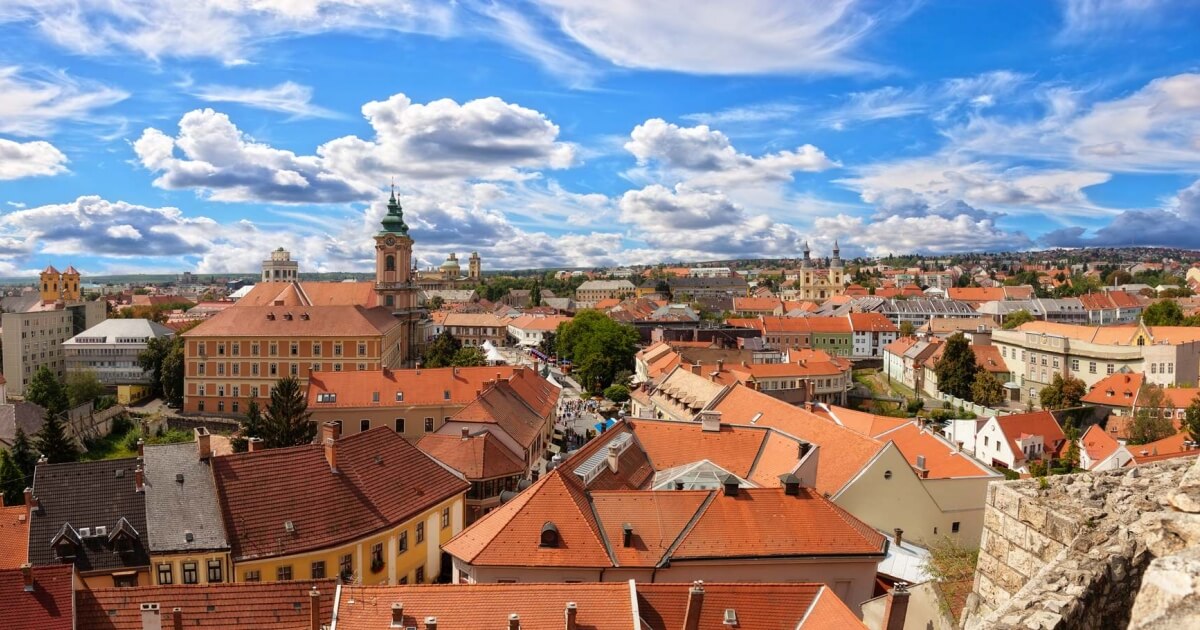
Eger and its surroundings are waiting to be explored
Exploring the area offers countless experiences, which is why it is so popular among both Hungarian and international travellers. We are happy to share a few tips for family excursions and sightseeing trips in and around Eger. Should you need maps, bicycles, picnic blankets, backpacks or similar equipment for your adventures, please contact our reception team, who will be happy to assist you!
Where to set off
First of all, it is worth discovering our immediate surroundings – so let’s start with Noszvaj! After all, this is where we are located. Tündérkert Hotel is a popular destination for family-friendly holidays and getaways.
Noszvaj
According to written records, a small Romanesque-style church already stood here in 1248. In the second half of the 16th century it became a Reformed church. In 1928, the old building was demolished and replaced by a wider and longer church using elements of the original structure.
Turning right in front of the church, we reach one of the most important monuments of the village, which is directly connected to Tündérkert Hotel. The Szepessy–de la Motte–Almásy Castle and its outbuildings were constructed between 1774 and 1778 in the copf (late Baroque) style by architect János Povolay. With its exterior and interior decorations, the building is a remarkably well-preserved Hungarian example of the Louis XVI period. Today, the castle is open to visitors as a museum.
Remnants of folk architecture can be seen in the cave dwellings and cellar houses developed in the early 19th century, as well as in the restored farmhouse that now serves as a museum exhibition site.
Visitors can enjoy not only the tranquillity of nature, but also a variety of cultural programmes. One highlight is the Summer Music Evenings series, which entertains guests each year with musical traditions and Hungarian folk heritage. The village is an integral part of the historic Eger wine region, with vineyards, cellars and favourable natural conditions. To the north lies Síkfőkút, located in the picturesque valley of the Kánya Stream, a popular destination for excursions and recreation.
Szomolya
The village lies 17 kilometres east of Eger and can be reached via Noszvaj. Tourist attractions include the beehive stones, Leánytó (Maiden Lake), the local heritage house, Roman Catholic church, Pottery House and livestock shelters carved into rhyolite tuff. Traditionally, the National Folk Music Festival is held here on the last Saturday of May.
Eger
Eger and its surroundings boast numerous historically significant attractions. This small town of over a thousand years is renowned for its rich history, architectural heritage, wines and thermal waters. Eger is often referred to as a historic city, the city of Baroque architecture, wine, thermal baths and students. It has been a bishop’s seat since the reign of Hungary’s first king, Saint Stephen.
Although repeatedly affected by wars and invasions, the stone castle built in the 13th century played a crucial defensive role during the Ottoman wars. In 1552, Captain István Dobó and his 2,000 defenders resisted the fortyfold Ottoman forces for more than a month.
In the 18th century, Eger became a major cultural and educational centre. Nearly 170 outstanding architectural monuments from past centuries have survived in remarkably intact condition. These include the castle and fortress system, castle museum, casemates, Specula Observatory, Archbishop’s Palace, city walls and bastions, Turkish Bath, Rozália Chapel, Baroque Minorite Church, Minaret, Orthodox Church, Archbishop’s Collection Centre, the Telekessy István Pharmacy Museum with Haban ceramics, and the Géza Gárdonyi Memorial Museum in the writer’s former home.
The city and region form a famous historic wine region. For nearly a thousand years, locals have cultivated vines and produced outstanding wines such as Egri Bikavér, Egri Leányka, Debrői Hárslevelű, Egri Chardonnay, Egri Cabernet Franc and Sauvignon, Egri Merlot, Egri Kékfrankos and Kékmedoc. Some wine cellars are over 400 years old, and new ones are still being carved today. The healing waters of the area have been known since the 15th century. During Ottoman rule, several public baths operated; the restored Turkish Bath of Arnaut Pasha remains open to visitors seeking relaxation and healing. Alongside historical sights, the city hosts recurring annual events, including outdoor festivals, concerts and folk and modern dance performances.
Andornaktálya
This settlement has now almost completely merged with Eger. Andornaktálya was formed in 1939 from the villages of Andornak and Kistálya. It is easily accessible by road and railway. The long main street connects the two formerly separate villages. The area was inhabited early on, though repeatedly destroyed by Turks and Kuruc forces, and resettled again from the mid-18th century.
In Kistálya, a Roman Catholic church was built in 1723, later replaced by a late Baroque church. The Mocsáry Castle, built between 1836 and 1938, is a classicist-style, two-storey building along the main road. The reliefs on its façade were carved by Venetian sculptor Marco Casagrande. Proximity to Eger, excellent transport connections and rural tranquillity make the village particularly attractive.
Demjén
This small village lies 10 kilometres southwest of Eger and is easily accessible from Route 3. The Szalóki Stream flows through the settlement along the Laskó area. Nearby, a thermal spring flows through an almost untouched natural environment, leaving limestone deposits behind. Vineyards have existed here since 1712. Demjén preserves strong folk traditions; traditional peasant houses feature gabled roofs and richly decorated façades. Construction of the present Baroque-style church began in 1777.
Aldebrő
Aldebrő is easily accessible from Eger via several routes: through Kerecsend and Kápolna, or via Verpelét and Feldebrő, as well as by rail on the Kisújszállás–Bátonyterenye line.
Copper Age graves, Late Bronze Age artefacts and Conquest-era arrowheads have been found near the village. The settlement expanded in the 18th century but was destroyed by fire in 1827. Its founder built a church for the inhabitants, consecrated by Károly Eszterházy in 1762. The church stands in the centre of the village, while a statue of Saint John of Nepomuk can be seen near the Tarna Bridge.
Locals often refer to Aldebrő as the “village of statues.” One of the most beautiful statues of the Virgin Mary stands at Árpád Street 9, while another can be found hidden in the forest. The village offers a playground, scenic rest areas and walkways. It is especially worth visiting during the grape harvest festivals in autumn and the Whitsun fair. As a wine-producing area, Aldebrő hosts a unique wine competition each February. Those seeking peace, fine wines, hunting or fishing will find all this here.
Novaj
Approaching from Ostoros, the village can be seen from the highest point of Macskás Hill. Its first documented mention dates back to 1275. Burned down by the Ottomans in 1552, it was later resettled. The church stands on a hill in the centre of the village, likely built in the 1280s and restored between 1730 and 1746. A stone column from the Ottoman period can be found in the southern part of the village. Dining options are available at the restaurant located in the village centre.